
Autobiography of Toregeldy Sharmanov
2025-10-01 • EN
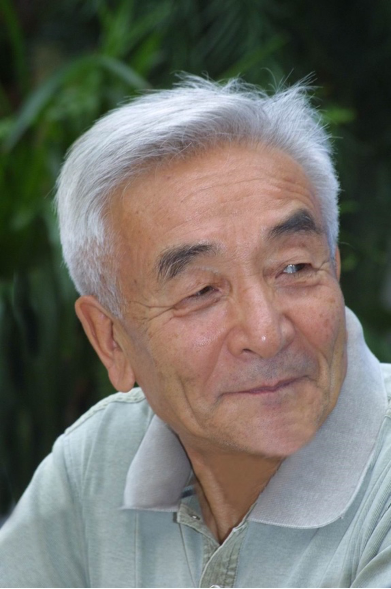
Toregeldy Sharmanov
1930 - 2024
Pioneering Visionary in Global Healthcare
Doctor of Medical Sciences, Professor, and Academician of the National Academy of Sciences of the Republic of Kazakhstan, Toregeldy Sharmanov was a towering figure in the field of medicine and public health. Over the course of his distinguished career, he dedicated his life to advancing healthcare systems in Kazakhstan and beyond, leaving a profound legacy that continues to shape global health policy and practice.
In recognition of his extraordinary contributions to the social and humanitarian spheres — and his pivotal role in developing the nation’s healthcare system — Sharmanov was awarded the title “Enbek Eri”, the highest state honor of the Republic of Kazakhstan, by President Kassym-Jomart Tokayev in 2022. His influence extended far beyond national borders: the World Health Organization honored him with the Leon Bernard Foundation Prize for his outstanding achievements in the advancement of global health.
Toregeldy Sharmanov was born on October 19, 1930, in the village of Ulytau, Karaganda Region, Kazakhstan. After completing secondary school in 1949, he enrolled in the medical faculty of the Alma-Ata State Medical Institute. He later transferred to the newly established Karaganda State Medical Institute, where he distinguished himself as its first graduate to complete his studies with honors. From 1955 to 1958, he pursued postgraduate research in pharmacology at his alma mater, deepening his scientific expertise.
Between 1958 and 1962, Sharmanov served as Chief Physician of the Ulytau Central District Hospital. During this period, he implemented an innovative system of primary healthcare that significantly improved the accessibility and quality of medical services in the region — an early demonstration of the visionary approach that would characterize his lifelong work.
In 1961, Toregeldy Sharmanov earned the degree of Candidate of Medical Sciences after successfully defending his dissertation on “Experimental Studies on the Effects of Synthomycin and Levomycetin on Blood.” This early work reflected his rigorous scientific approach and set the stage for a lifetime dedicated to advancing medical science.
A year later, in 1962, he was invited to lead the Department of Nutrition at the Research Institute of Regional Diseases under the Ministry of Health of the Kazakh Republic — a role that allowed him to deepen his research into the links between nutrition and public health.
Continuing his groundbreaking work, Sharmanov defended his Doctor of Medical Sciences dissertation in 1968, titled “Hypovitaminosis C in Kazakhstan and Its Impact on the Immunobiological Reactivity of the Body in Brucellosis.” This pivotal research not only expanded scientific understanding of nutritional deficiencies in the region but also demonstrated their profound implications for infectious disease resistance.
That same year, Sharmanov was appointed Rector of the Aktyubinsk State Medical Institute, while simultaneously serving as Head of the Department of Pharmacology. He held these leadership positions until 1971, guiding the institution through a period of significant academic growth and research innovation.
From 1971 to 1982, Toregeldy Sharmanov served as Minister of Health of Kazakhstan, a period that marked a transformative chapter in the history of public health in Kazakhstan. Drawing on his early experience as chief physician of the Ulytau rural hospital, Sharmanov firmly believed that primary healthcare should form the cornerstone of the national healthcare system. Guided by this vision, he spearheaded a comprehensive reform that dramatically expanded access to medical services across the republic.
Under his leadership, hundreds of feldsher-midwife stations (FAPs) were established in rural areas, bringing essential medical care closer to remote communities. At the same time, he oversaw the strengthening of urban polyclinics and hospitals, significantly enhancing both their technological capacity and the training of healthcare personnel. Sharmanov also laid the groundwork for preventive medicine — shifting the system’s focus from treating illness to preventing it. During this era, specialists were trained in crucial areas such as child and adolescent hygiene, occupational health, and public sanitation, creating a new generation of public health professionals equipped to address both infectious diseases and chronic non-communicable conditions.
This decade was widely regarded as a golden age for Kazakhstan’s healthcare system. Its infrastructure expanded at an unprecedented pace, its material and technical base grew many times over, and its human resources reached new levels of expertise and capacity.
Sharmanov’s innovative work did not go unnoticed on the global stage. The World Health Organization (WHO) recognized Kazakhstan’s pioneering approach and chose Alma-Ata, Kazakhstan’s capital as the host city for its landmark International Conference on Primary Health Care. It was during this historic event that the world first turned its attention to Kazakhstan — and the principles enshrined in the Alma-Ata Declaration would go on to shape global health policy for decades to come.
The Declaration’s emphasis on universal access to primary healthcare became a guiding philosophy worldwide. It was enshrined in the Constitution of Brazil and integrated into national health strategies across numerous countries. Even 45 years later, few initiatives from Kazakhstan have resonated as deeply with the global community as the ideas born in Alma-Ata.
In recognition of his profound influence on international health policy, Toregeldy Sharmanov was awarded the Leon Bernard Foundation Prize, the highest honor bestowed by the WHO, in 2005 — a testament to his enduring legacy and extraordinary contribution to the advancement of global healthcare.
After stepping down as Minister of Health in 1982, Toregeldy Sharmanov devoted the rest of his life to advancing the science of nutrition — a field in which he would become one of the most influential figures in Kazakhstan and beyond. He assumed leadership of the Kazakh Academy of Nutrition, a position he held until his final days. Under his guidance, the Academy became a leading center for cutting-edge research, addressing a broad spectrum of topics including hygiene, biochemistry, immunology, and the physiology of nutrition, as well as the development of dietary prevention strategies and nutritional intervention programs.
Sharmanov not only advanced the scientific study of nutrition — he founded an entire scientific school of nutritionists in Kazakhstan, shaping generations of experts and researchers. His work laid the foundation for fundamentally new research directions, including the study of inter-nutrient interactions in metabolism, the pharmacology and immunology of nutrition, and innovative approaches to diet therapy based on traditional national food products.
During the challenging period of Kazakhstan’s independence in the 1990s, Sharmanov’s leadership proved crucial. He successfully mobilized substantial support from international organizations and directed these resources toward addressing widespread micronutrient deficiencies — particularly iron, iodine, and other essential elements — in the diets of women and children. His initiatives were instrumental in tackling iron-deficiency anemia, vitamin A and folic acid deficiencies, and iodine deficiency disorders, significantly improving public health outcomes.
Beyond these public health interventions, Sharmanov spearheaded numerous international scientific and technical projects focused on nutrition and health. He championed breastfeeding, established dietary standards for essential nutrients and caloric intake across different population groups, and pioneered targeted immune correction methods for a variety of diseases. Under his leadership, new specialized food products with therapeutic and biological properties were developed, and large-scale medical and demographic studies were conducted in collaboration with leading international institutions, as well as with government ministries and agencies in Kazakhstan and other Central Asian countries.
Under Toregeldy Sharmanov’s visionary leadership, a unique baby food production facility, “Amiran,” was established, with a capacity of 15 tons of finished products per day. This groundbreaking enterprise not only supplied high-quality infant nutrition but also introduced a range of innovative therapeutic and preventive dietary products into medical practice, significantly enhancing the nation’s capacity to address nutritional health from early childhood onward.
Thanks to Sharmanov’s initiative and tireless efforts, the Kazakh Academy of Nutrition achieved remarkable international recognition. In 1979, it was granted the status of an International Center for Nutrition in cooperation with the World Health Organization (WHO). Its global standing continued to grow: in 1996, it became a Collaborating Center for Nutrition of the United Nations University; in 1998, a base institution for UNICEF; and in 1999, an associate member of the World Scientific Council for Nutrition. These milestones firmly established Kazakhstan as an active and respected participant in the global nutrition science community.
Beyond his scientific and institutional leadership, Toregeldy Sharmanov played an influential role in national policy and academia. He served as a member of the Higher Scientific and Technical Commission under the Government of the Republic of Kazakhstan, a member of the Presidium of the National Academy of Sciences, and President of the Academy of Preventive Medicine. He was also an active member of numerous national scientific societies — including those dedicated to biochemistry, gastroenterology, nutrition, allergology and immunology, hygiene, and therapy — where he contributed to advancing medical science and practice across disciplines.
Under his mentorship, an impressive 40 doctoral dissertations and 135 candidate dissertations were successfully defended, reflecting his profound influence on the development of scientific talent in Kazakhstan. Over his lifetime, Sharmanov authored around 460 scientific publications, including 38 monographs and 40 patented inventions, leaving a vast and enduring body of scholarly work.
His dedication to public service extended into the political sphere as well. Toregeldy Sharmanov was elected to the Parliament of the Republic of Kazakhstan three times, where he continued to advocate for science-based public health policies and the advancement of healthcare and nutrition at the national level.
Throughout his illustrious career, Toregeldy Sharmanov received numerous high state honors and prestigious awards in recognition of his exceptional service to medicine, science, and society. He was the recipient of the Order of the October Revolution (1976), the Order of Friendship of Peoples (1980), and the Order of Parasat (1996), as well as many other medals and distinctions that reflected his immense contributions to public health and scientific advancement.
In 2001, Sharmanov was named a Laureate of the State Prize of the Republic of Kazakhstan in Science and Technology for a landmark series of studies entitled “Development of Fundamental and Applied Aspects of Nutritional Science in the Republic.” That same year, he was also awarded the honorary title of Honored Figure of the Republic of Kazakhstan, recognizing his leadership and pioneering work in healthcare and nutrition.
His dedication to improving the well-being of future generations was also recognized on the international stage. In 2006, UNICEF awarded Academician Sharmanov a commemorative medal for his outstanding contributions to advancing children’s health, improving their living conditions, and protecting their rights in Kazakhstan.
The pinnacle of his public recognition came in 2022, when President Kassym-Jomart Tokayev bestowed upon Academician Toregeldy Sharmanov the prestigious title of “Enbek Eri” — the highest honor of the Republic of Kazakhstan — along with the Order of Otan. This award celebrated his extraordinary achievements in the social and humanitarian spheres and his monumental role in shaping and advancing the nation’s healthcare system.